
Getting a harvester ready for winter: a practical checklist
Which parts need attention before the machine goes into storage?
The last row has been harvested and the machine goes into the shed. Now is exactly the moment to prepare for the next harvest. What you do now, you will not have to do in a hurry in July.
First look around, then clean
Tip: before cleaning, first walk around the machine with pen and paper. Look for dark, oily patches: you often cannot see them any more after cleaning. Such a patch may point to a leaking hose, coupling, O-ring, gasket or oil seal.
Plant residue and dust hold moisture and attract rodents. Clean the machine thoroughly, preferably first with compressed air and then with water. A pressure washer can also be used, but be careful around bearings, stickers and paintwork.
Clean the cooling pack as well, and take your time over it. Clean it from both sides, preferably with warm water and soap at low pressure: this softens the sticky residue inside the radiator. Start on the side where the air comes out, so you push the dirt outwards instead of deeper into the pack. Finally, check it with a lamp: shine it through and see whether you can see the light through the radiator on the other side.
A clean machine also shows more clearly where oil is leaking or a hose is chafing.
Three things to do now
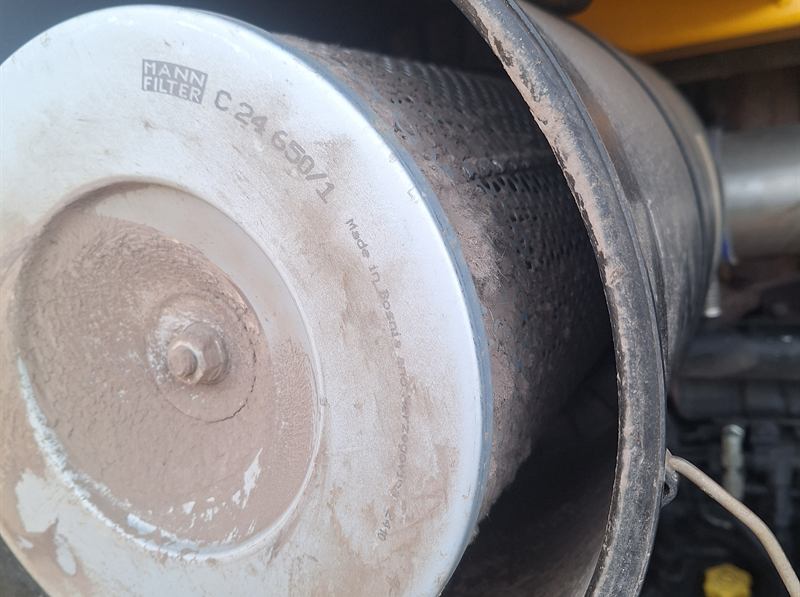
- Change filters and oil. Old oil with dirt and moisture sits in the system all winter. Change it now, and you start the season clean.
- Check bearings and chains. Grease the machine straight after cleaning; this pushes the water out of the bearings. Turn shafts by hand and feel for play. If you are unsure about a part, write it down. With a list like that you will not forget anything, and when you check the machine before the season, you tick the points off one by one.
- Make a list of what is needed. Ordering parts in winter is calmer than during the harvest, and delivery times are not a problem then.
Tip: after washing and greasing, let the machine run for a few hours with the lights on. The heat drives off the moisture left behind after cleaning. Keep the safety regulations in mind: for example, never let the engine run in an enclosed space.
Store it well
Keep the machine dry and preferably under a roof. Take the load off the tyres where possible, and protect bare cylinder rods against rust.